Showing posts with label Environment. Show all posts

Sauna bathing is inversely associated with dementia and Alzheimer's disease in middle-aged Finnish men. - PubMed - NCBI

 BACKGROUND:
there are no previous studies linking repeated heat exposure of sauna and the risk of memory diseases. We aimed to investigate whether frequency of sauna bathing is associated with risk of dementia and Alzheimer's disease.

 SETTING:
prospective population-based study.
METHODS:
the frequency of sauna bathing was assessed at baseline in the Kuopio Ischaemic Heart Disease population-based prospective cohort study of 2,315 apparently healthy men aged 42-60 years at baseline, with baseline examinations conducted between 1984 and 1989. Hazard ratios (HRs) with 95% confidence intervals (CIs) for dementia and Alzheimer's disease were ascertained using Cox-regression modelling with adjustment for potential confounders. 

RESULTS:
during a median follow-up of 20.7 (interquartile range 18.1-22.6) years, a total of 204 and 123 diagnosed cases of dementia and Alzheimer's disease were respectively recorded. In analysis adjusted for age, alcohol consumption, body mass index, systolic blood pressure, smoking status, Type 2 diabetes, previous myocardial infarction, resting heart rate and serum low-density lipoprotein cholesterol, compared with men with only 1 sauna bathing session per week, the HR for dementia was 0.78 (95% CI: 0.57-1.06) for 2-3 sauna bathing sessions per week and 0.34 (95% CI: 0.16-0.71) for 4-7 sauna bathing sessions per week. The corresponding HRs for Alzheimer's disease were 0.80 (95% CI: 0.53-1.20) and 0.35 (95% CI: 0.14-0.90).

CONCLUSION:
in this male population, moderate to high frequency of sauna bathing was associated with lowered risks of dementia and Alzheimer's disease. Further studies are warranted to establish the potential mechanisms linking sauna bathing and memory diseases."


'via Blog this'

Accumulated environmental risk determining age at schizophrenia onset: a deep phenotyping-based study.

Schizophrenia is caused by a combination of genetic and environmental factors, as first evidenced by twin studies. Extensive efforts have been made to identify the genetic roots of schizophrenia, including large genome-wide association studies, but these yielded very small effect sizes for individual markers. In this study, we aimed to assess the relative contribution of genome-wide association study-derived genetic versus environmental risk factors to crucial determinants of schizophrenia severity: disease onset, disease severity, and socioeconomic measures.

METHODS:

In this parallel analysis, we studied 750 male patients from the Göttingen Research Association for Schizophrenia (GRAS) dataset (Germany) with schizophrenia for whom both genome-wide coverage of single-nucleotide polymorphisms and deep clinical phenotyping data were available. Specifically, we investigated the potential effect of schizophrenia risk alleles as identified in the most recent large genome-wide association study versus the effects of environmental hazards (ie, perinatal brain insults, cannabis use, neurotrauma, psychotrauma, urbanicity, and migration), alone and upon accumulation, on age at disease onset, age at prodrome, symptom expression, and socioeconomic parameters.

FINDINGS:

In this study, we could show that frequent environmental factors become a major risk for early schizophrenia onset when accumulated (prodrome begins up to 9 years earlier; p=2·9×10-10). In particular, cannabis use-an avoidable environmental risk factor-is highly significantly associated with earlier age at prodrome (p=3·8×10-20). By contrast, polygenic genome-wide association study risk scores did not have any detectable effects on schizophrenia phenotypes.

INTERPRETATION:

These findings should be translated to preventive measures to reduce environmental risk factors, since age at onset of schizophrenia is a crucial determinant of an affected individual's fate and the total socioeconomic cost of the illness.

Nine risk factors may contribute to two thirds of Alzheimer's cases worldwide - Medical News Today

They found grade 1 level evidence in favour of a protective effect for the female hormone oestrogen, cholesterol lowering drugs (statins), drugs to lower high blood pressure, and anti-inflammatory drugs (NSAIDs).

They found the same level of evidence for folate, vitamins C and E, and coffee, all of which were associated with helping to stave off the disease.

Similarly, the pooled data indicated a strong association between high levels of homocysteine - an amino acid manufactured in the body - and depression and a significantly heightened risk of developing Alzheimer's disease.

The evidence also strongly pointed to the complex roles of pre-existing conditions as either heightening or lowering the risk.

The factors associated with a heightened risk included frailty, carotid artery narrowing, high and low blood pressure, and type 2 diabetes (in the Asian population). Those associated with a lowered risk included a history of arthritis, heart disease, metabolic syndrome, and cancer.

Association Between Altitude and Regional Variation of ADHD in Youth

Objective:
The purpose of this study was to evaluate the effect of altitude on rates of ADHD. As decreased dopamine (DA) activity has been reported with ADHD and hypoxia has shown to be associated with increased DA, we hypothesized that states at higher altitudes would have lower rates of ADHD.
Method: 
State estimates from the 2007 National Survey of Children’s Health (NSCH) report and 2010 National Survey of Children with Special Health Care Needs (NS-CSHCN) report were used to extract the percentages of youth ages 4 to 17 diagnosed with ADHD. Results: Both the datasets independently revealed that the prevalence of ADHD decreases with increasing altitude (R 2 = .38, p < .001; R 2 = .31, p < .001), respectively. This study controlled for potential confounds (e.g., low birth weight, ethnicity, and household size).
Conclusion: These findings suggest a need for further investigation into the extent by which altitude may serve as a protective factor for ADHD.

Environmental factors as important as genes in understanding autism

Environmental factors are more important than previously thought in understanding the causes of autism, and equally as important as genes, according to the largest study to date to look at how autism runs in families.

The study also shows that children with a brother or sister with autism are 10 times more likely to develop autism; 3 times if they have a half-brother or sister; and 2 if they have a cousin with autism, providing much needed information for parents and clinicians for assessing individual risk.

The study, which looked at over 2 million people, was led by researchers at King's College London, Karolinska Institutet in Sweden and Mount Sinai in the US, and is published in JAMA today

Autism, intellectual disability incidence linked with environmental factors -- ScienceDaily

An analysis of 100 million US medical records reveals that autism and
intellectual disability (ID) rates are correlated at the county level
with incidence of genital malformations in newborn males, an indicator
of possible congenital exposure to harmful environmental factors such as
pesticides.

Male fetuses are particularly sensitive to toxins such as environmental
lead, sex hormone analogs, medications and other synthetic molecules.
Parental exposure to these toxins is thought explain a large portion of
congenital reproductive malformations, such as micropenis, hypospadias
(urethra on underside of the penis), undescended testicles and others.

Non-reproductive congenital malformations and viral infections in males
were also associated with double digit increases in autism and ID rates.

PLOS ONE: Describing the Relationship between Cat Bites and Human Depression Using Data from an Electronic Health Record

Data mining approaches have been increasingly applied to the electronic
health record and have led to the discovery of numerous clinical
associations. Recent data mining studies have suggested a potential
association between cat bites and human depression. To explore this
possible association in more detail we first used administrative
diagnosis codes to identify patients with either depression or bites,
drawn from a population of 1.3 million patients. We then conducted a
manual chart review in the electronic health record of all patients with
a code for a bite to accurately determine which were from cats or dogs.
Overall there were 750 patients with cat bites, 1,108 with dog bites,
and approximately 117,000 patients with depression. Depression was found
in 41.3% of patients with cat bites and 28.7% of those with dog bites.
Furthermore, 85.5% of those with both cat bites and depression were
women, compared to 64.5% of those with dog bites and depression. The
probability of a woman being diagnosed with depression at some point in
her life if she presented to our health system with a cat bite was
47.0%, compared to 24.2% of men presenting with a similar bite. The high
proportion of depression in patients who had cat bites, especially
among women, suggests that screening for depression could be appropriate
in patients who present to a clinical provider with a cat bite.
Additionally, while no causative link is known to explain this
association, there is growing evidence to suggest that the relationship
between cats and human mental illness, such as depression, warrants
further investigation.
Enhanced by Zemanta

Environmental toxins linked to heart defects

  The group showed a strong correlation with rates of congenital heart defects. According to Ngwezi, the group of chemicals consists of a mixture of organic compounds and metals namely: benzene, butadiene, carbon disulphide, chloroform, ethylene oxide, hexachlorobenzene, tetrachloroethane, methanol, sulphur dioxide, toluene, lead, mercury and cadmium."

USDA study hints at possible links between soil characteristics and stroke risk

"In their initial analysis, the team found that stroke rates were significantly correlated with depth to water table and soil drainage class. Stroke rates were higher in counties where soil depth to water table was between 20 and 59 inches, which is often the case for shallow water tables in the Coastal Plain. (Soils with water tables less than 20 inches deep are usually found in flood-prone areas near streams, rivers, or wetlands—sites that are generally unsuitable for residential use.) Links between stroke rate and soil drainage were also significant: Well-drained soils had a negative correlation (fewer strokes), while poorly drained soils were positively correlated (more strokes)."Based on their findings, the South Carolina scientists hypothesize that an early-life exposure to the specific microbial mix in Coastal Plain soils might affect microbiome development in a way that leaves some individuals more vulnerable to cardiovascular events like stroke.

Epidemiology and Etiology of Alzheimer's Disease: from Genetic to Non-Genetic Factors.

At present, the etiology of Alzheimer's disease (AD) is still unclear, but both genetic and non-genetic factors are thought to take part in the etiopathogenesis of AD. Epidemiologic researches revealed that genetic factors played a decisive role in the development of both early-onset AD (EOAD) and late-onset AD (LOAD). The mutations in APP, PSEN1 and PSEN2 are inherited in a Mendelian fashion and directly lead to the EOAD, while recent genome-wide association studies have identified numbers of risky genes, which influences the susceptibility to LOAD. Although genetic factors are inherited and fixed, non-genetic factors, such as occupational exposures (exposure to pesticides, electromagnetic fields, organic solvents and volatile anesthetics), pre-existing medical conditions (cerebrovascular disease, hypertension, diabetes, dyslipidemia, traumatic brain injury, depression and cancer) and lifestyle factors (smoking, consumptions of alcohol and coffee, body mass index, physical activity and cognitive activity), are partly environmentally-determined. Timely interventions targeted at these non-genetic risk factors may offer opportunities for prevention and treatment of AD. In the future, more high-quality and large-sample epidemiologic studies are needed to identify risk factors for AD, and the interaction models between genetic and non-genetic risk factors required further investigation. In addition, public health campaigns targeted at modification of non-genetic risk factors should be developed among population at high risk of AD.

Estrogen-Eating Bacteria = Safer Water

Usually, when you mention bacteria in connection with water, it’s a bad thing. But one Texas A&M engineering researcher believes the right bacteria are a natural weapon for fighting an emerging water contaminant: estrogen.

Increasingly sensitive methods of screening water for polluting substances allow environmental scientists to monitor traces of previously undetected contaminants in otherwise clean water: trace amounts of pharmaceutical and personal care products ranging from antibiotics to anesthetics and, especially, estrogens.

Geographic Variation in the Prevalence of Attention-Deficit/Hyperactivity Disorder: The Sunny Perspective.


Attention-deficit/hyperactivity disorder (ADHD) is the most common psychiatric disorder of childhood, with average worldwide prevalence of 5.3%, varying by region.

METHODS:

We assessed the relationship between the prevalence of ADHD and solar intensity (SI) (kilowatt hours/square meters/day) on the basis of multinational and cross-state studies. Prevalence data for the U.S. were based on self-report of professional diagnoses; prevalence data for the other countries were based on diagnostic assessment. The SI data were obtained from national institutes.

RESULTS:

In three datasets (across 49 U.S. states for 2003 and 2007, and across 9 non-U.S. countries) a relationship between SI and the prevalence of ADHD was found, explaining 34%-57% of the variance in ADHD prevalence, with high SI having an apparent preventative effect. Controlling for low birth weight, infant mortality, average income (socioeconomic status), latitude, and other relevant factors did not change these findings. Furthermore, these findings were specific to ADHD, not found for the prevalence of autism spectrum disorders or major depressive disorder.

CONCLUSIONS:

In this study we found a lower prevalence of ADHD in areas with high SI for both U.S. and non-U.S. data. This association has not been reported before in the literature. The preventative effect of high SI might be related to an improvement of circadian clock disturbances, which have recently been associated with ADHD. These findings likely apply to a substantial subgroup of ADHD patients and have major implications in our understanding of the etiology and possibly prevention of ADHD by medical professionals, schools, parents, and manufacturers of mobile device

Brain diseases affecting more people and starting earlier than ever before

 "Professor Colin Pritchard's latest research published in journal Public Health has found that the sharp rise of dementia and other neurological deaths in people under 74 cannot be put down to the fact that we are living longer. The rise is because a higher proportion of old people are being affected by such conditions -- and what is really alarming, it is starting earlier and affecting people under 55 years."When asked what he thought caused the increases he replied, "This has to be speculative but it cannot be genetic because the period is too short. Whilst there will be some influence of more elderly people, it does not account for the earlier onset; the differences between countries nor the fact that more women have been affected, as their lives have changed more than men's over the period, all indicates multiple environmental factors. Considering the changes over the last 30 years -- the explosion in electronic devices, rises in background non-ionising radiation- PC's, micro waves, TV's, mobile phones; road and air transport up four-fold increasing background petro-chemical pollution; chemical additives to food etc. There is no one factor rather the likely interaction between all these environmental triggers, reflecting changes in other conditions. 


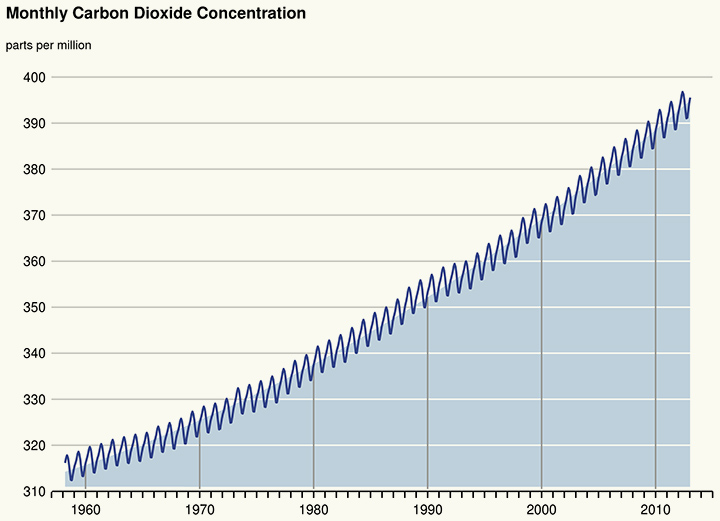
As CO2 Reaches Symbolic Milestone, Scripps Launches Daily Keeling Curve Update

For the first time in human history, concentrations of the greenhouse gas carbon dioxide (CO2) could rise above 400 parts per million (ppm) for sustained lengths of time throughout much of the Northern Hemisphere as soon as May 2013.

Enhanced by Zemanta

A correlation study between multiple sclerosis and type 1 diabetes incidences and geochemical data in Europe.

Complex multifactorial disorders usually arise in individuals genetically at risk in the presence of permissive environmental factors. For many of these diseases, predisposing gene variants are partly known while the identification of the environmental component is much more difficult. This study aims to investigate whether there are correlations between the incidence of two complex traits, multiple sclerosis and type 1 diabetes, and some chemical elements and compounds present in soils and stream sediments in Europe. Data were obtained from the published literature and analyzed by calculating the mean values of each element and of disease incidence for each Country, respectively, 17 for multiple sclerosis and 21 for type 1 diabetes. Correlation matrices and regression analyses were used in order to compare incidence data and geochemical data. R correlation index and significance were evaluated. The analyses performed in this study have revealed significant positive correlations between barium and sodium oxide on one hand and multiple sclerosis and diabetes incidences on the other hand that may suggest interactions to be evaluated between silicon-rich lithologies and/or marine environments. The negative correlations shown by cobalt, chromium and nickel (typical of silicon-poor environment), which in this case can be interpreted as protective effects against the two diseases onset, make the split between favorable and protective environments even more obvious. In conclusion, if other studies will confirm the involvement of the above elements and compounds in the etiology of these pathologies, then it will be possible to plan strategies to reduce the spread of these serious pandemics.

Plastic products and jet fuel exposures raising incidences of 'epigenetic transgenerational inheritance'

Writing in the online journal PLOS ONE, scientists led by molecular biologist Michael Skinner document reproductive disease and obesity in the descendants of rats exposed to the plasticizer bisephenol-A, or BPA, as well DEHP and DBP, plastic compounds known as phthalates. In a separate article in the journal Reproductive Toxicology, they report the first observation of cross-generation disease from a widely used hydrocarbon mixture the military refers to as JP8.

Read more at: http://medicalxpress.com/news/2013-01-plastic-products-jet-fuel-exposures.html#jCp
Enhanced by Zemanta

Drinking Better Bacteria | The Scientist

Researchers analyzing the bacteria in municipal drinking water find simple measures can increase beneficial bacteria while reducing pathogenic strains.
Enhanced by Zemanta